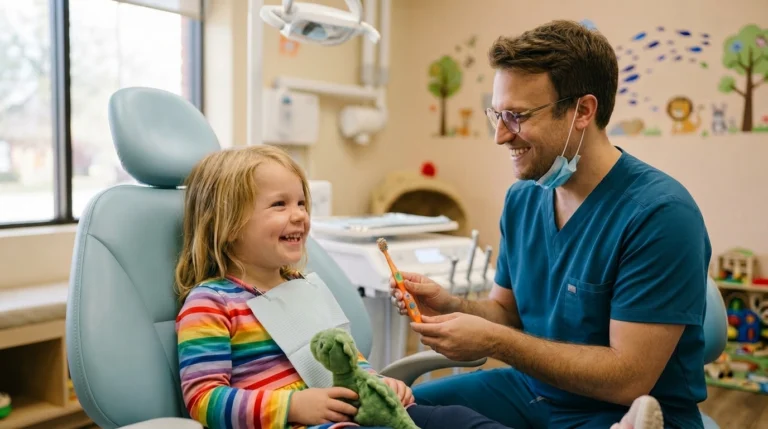


You hear it in the middle of the night, a grinding sound coming from your child’s room. Or your child wakes up with a sore jaw and a headache, and you can’t figure out why. Maybe you’ve already noticed some unusual wear on their teeth at a routine checkup. These are all signs of bruxism, the clinical term for teeth grinding and clenching, and it’s more common in children than most parents realize.
The reassuring thing is that teeth grinding and jaw pain in kids are usually temporary, and many children outgrow it on their own. But some cases do need attention, and knowing the difference between what’s normal and what warrants a visit to your pediatric dentist can save your child from developing long-term problems with their teeth or jaw. This guide covers everything parents need to know: what causes bruxism, how to spot it, which bruxism treatments are available, when a gum shield is the right move, and when you can simply watch and wait.
What Is Bruxism?
It is an involuntary grinding or clenching of the teeth. In children, it most often happens during sleep, though some kids also clench during waking hours, especially during periods of concentration or stress. The grinding can be loud enough to hear from across the room, or it can happen silently, with the only signs being worn enamel or a sore jaw in the morning.
It is helpful to understand that bruxism isn’t a single problem with a single cause. It is a behavioral pattern that can arise from a mix of physical, developmental, and psychological factors, and the right response largely depends on which of those factors are driving it.
Bruxism in Infants and Toddlers
Bruxism in infants is one of the most frequent questions we get from new parents, and the short answer is: it’s common, and it’s usually harmless at this stage. Babies and toddlers often grind their emerging teeth as they explore the sensation of having teeth, in response to teething discomfort, or simply because their developing nervous system produces these movements during sleep.
At this age, bruxism almost always resolves on its own without any intervention. Baby teeth are temporary, and even if some wear does occur, it rarely causes lasting damage. The exception would be a child with significant pain, visible dental damage, or disrupted sleep, in which case a visit is worthwhile to rule out another underlying issue like an ear infection, which can sometimes trigger grinding in very young children.
The point where we want to pay closer attention is when bruxism continues into the years when permanent teeth are present, or when a child develops jaw pain, morning headaches, or tooth sensitivity alongside the grinding.
What Causes Teeth Grinding in Kids?
Bruxism in children has several recognized causes, and in many cases, more than one factor is at play at the same time.
Stress and anxiety are among the most common drivers. Children process stress differently than adults, and grinding can be a physical outlet for emotional tension they haven’t yet developed the language to express. School pressure, social changes, family transitions, and even excitement about something upcoming can all trigger a grinding pattern that shows up during sleep.
Teeth misalignment or an uneven bite can cause the jaw to seek a comfortable resting position during sleep, which sometimes results in grinding. This is something we can evaluate during a routine checkup.
Pain elsewhere in the body, particularly earaches or teething discomfort in younger children, can trigger reflexive grinding. It tends to resolve once the underlying pain is addressed.
Sleep patterns and sleep disorders are also associated with bruxism. Children with disrupted sleep or sleep apnea may be more prone to grinding. If your child snores frequently, breathes through their mouth, or seems tired despite getting a full night of sleep, that’s worth mentioning when you come in.
Certain medications can contribute to bruxism as a side effect. If your child has recently started a new medication and you’ve noticed grinding begin around the same time, that’s a conversation to have with both the prescribing physician and your pediatric dentist.
Neurological and developmental differences also play a role for some children. Kids with cerebral palsy, ADHD, autism, or other differences are more likely to experience bruxism, often at higher intensity, and may need a more tailored approach to management. We work closely with families navigating these intersections through our special needs dentistry approach.
How to Tell If Your Child Is Grinding Their Teeth
Many children who grind their teeth don’t realize they do it, and since it often occurs during sleep, parents are usually the first to notice.
Signs that your child may be grinding:
- An audible grinding or scraping sound during sleep
- Complaints of jaw soreness, facial pain, or headaches in the morning
- Increased tooth sensitivity, especially to temperature
- Teeth that look flatter or more worn down than they should
- Pain or discomfort when chewing
- A clicking or sudden popping sensation in the jaw joint
Jaw pain in kids that appears regularly in the morning, or that your child mentions after waking up, is one of the more telling signs that sleep bruxism is the cause. If you’ve been hearing grinding sounds at night and your child has also started mentioning morning jaw soreness, it’s worth bringing both observations to your next appointment.
How Bruxism Is Diagnosed
Diagnosing bruxism doesn’t require any specialized test. We look for it during every routine examination by checking for flattened or chipped enamel, unusual wear patterns on the biting surfaces, and sensitivity when air or water is applied to the teeth. We’ll also ask about sleep habits, stress, and any symptoms your child has mentioned.
Because children often can’t tell us whether they’re grinding at night, parent observations are genuinely valuable. If you’ve heard the sound or noticed your child waking up with a sore jaw, sharing that information helps us connect what we’re seeing clinically to what’s actually happening at home. Our Dentistry 101 guide for parents walks through what to expect at routine checkups, including how we evaluate bite alignment and enamel wear as part of our full range of pediatric dental services.
Bruxism Treatments: What Works and When
The right approach to bruxism in kids depends on the severity, the likely cause, and your child’s age and dental stage. Every child with this habit may not need immediate treatment. For many younger children, the most appropriate plan is to monitor closely and address anything that might be contributing to it.
Addressing the Root Cause
Before recommending a physical intervention, we look at what’s driving the grinding. If stress or anxiety appears to be a significant factor, helping your child wind down before bed with a calmer routine, less evening screen time, and more opportunities to talk through worries can make a meaningful difference. If a misaligned bite is contributing, that’s something we can evaluate and, depending on severity, refer for orthodontic assessment when the time is right.
For children with an underlying medical contributor, whether that’s sleep apnea, a medication side effect, or another condition, coordinating with their pediatrician or specialist is often part of the plan.
Gum Shield for Bruxism: What It Is and When It’s Recommended
A gum shield for bruxism, also called a night guard or occlusal splint, is a custom-fitted appliance worn over the teeth during sleep. It functions by placing a protective barrier between the upper and lower teeth so that when the jaw clenches or grinds, the guard absorbs the pressure rather than the teeth.
A well-fitting gum shield for bruxism won’t stop the grinding itself, but it does protect the teeth from the wear and damage grinding causes over time. It can also help reduce jaw muscle tension, which often leads to the morning soreness and headaches kids experience.
For children, the timing of a gum shield’s use matters. During the mixed dentition phase, when a child still has a combination of baby and permanent teeth, the mouth is changing too rapidly for a rigid custom guard to remain well-fitted. We typically consider a night guard more seriously once a child has most or all of their permanent teeth in place and the grinding is causing visible wear, tooth sensitivity, or persistent jaw pain. We consider each case individually, taking into account the child’s age, dental development, and the impact of bruxism.
Custom-fitted appliances made through a dental office offer a significantly better fit and durability than over-the-counter options, which can be bulky, difficult for kids to tolerate, and don’t conform precisely to your child’s bite. If we recommend a night guard, we take impressions of your child’s teeth and have the guard made to fit their specific dental anatomy.
Monitoring Without Immediate Intervention
For younger children who are grinding their baby teeth, or for kids with mild grinding and no signs of tooth damage or jaw pain, the most appropriate plan is often watchful waiting with regular checkups. Most children do naturally reduce or stop grinding as they get older, and we see this especially after the transition from baby teeth to permanent teeth is complete. The goal of monitoring is to ensure we catch any developing damage early and are ready to act if the picture changes.
Teeth Grinding and Jaw Pain in Kids: When to Act Sooner
While many cases of childhood bruxism can be observed over time, a few situations call for a more immediate response:
- Teeth that are visibly chipping, cracking, or wearing flat
- Persistent jaw pain in kids that is affecting eating, speaking, or sleep
- Morning headaches that are becoming more frequent
- Tooth sensitivity that is developing or getting worse
- Signs of damage to existing dental work, like fillings or crowns
If you’re seeing any of these alongside the grinding, it’s time to schedule a visit rather than wait for the next routine appointment. You can reach our dental emergency team any time something feels urgent, and for non-emergency concerns, your next scheduled checkup is a good place to start the conversation.
Bruxism and Kids with Special Needs
Children with autism, ADHD, cerebral palsy, and other developmental or neurological differences experience bruxism at higher rates than the general pediatric population, and the grinding can be more intense and more persistent. For these children, a gum shield for bruxism may be recommended earlier or more strongly than for a neurotypical child, and the evaluation also assesses whether sensory factors, medication effects, or sleep differences are contributing.
Working with a pediatric dentist who understands both the dental and behavioral dimensions of this is essential. At Mighty Bites, our approach to kids with special health care needs is built around exactly this kind of individualized, whole-child thinking, from how we structure the appointment itself to how we make treatment recommendations.
What to Expect at a Mighty Bites Appointment
If bruxism or jaw pain in kids brings you in, your visit won’t feel rushed or clinical. We take the time to hear what you’ve been observing at home, do a thorough look at the teeth and bite, and talk through what we find in plain language before recommending anything.
We know that some kids, especially those who already have some anxiety around dental visits, can tense up when they hear there might be something “wrong.” That’s why we explain everything as we go, including what we’re looking at, what it means, and what the options are, without any pressure to make decisions on the spot. If a gum shield for bruxism is something we think would help your child, we’ll walk you through how it works, what the fitting process looks like, and what to realistically expect from wearing it.
For families who haven’t visited us before, our first visit page gives you a good sense of how we run appointments and what your child can expect from the moment they walk in.
Ready to Talk Through What You’re Hearing at Night?
Teeth grinding and jaw pain in kids are one of those concerns that benefit from a second set of eyes, or in this case, a second set of ears. Most of the time, it’s manageable, and often it resolves on its own. But when it isn’t, having a pediatric dentist you trust makes all the difference in catching signs early and responding before they become something bigger.
We serve families across Newtown Square, Broomall, Delaware County, and the Main Line, and our preventive care approach is built around catching things like bruxism before they create lasting damage.
Frequently Asked Questions
What is bruxism in kids?
It is an involuntary grinding or clenching of the teeth. It most commonly happens during sleep but can also occur while a child is awake and concentrating. It is common among children of all ages and often resolves on its own, though persistent or severe cases benefit from evaluation by a pediatric dentist.
Is bruxism in infants normal?
Yes. Bruxism in infants and toddlers is very common and typically harmless. It often starts when baby teeth emerge and tends to resolve without any treatment. Unless the grinding is accompanied by significant pain, sleep disruption, or visible tooth damage, observation is usually the appropriate response at this stage.
What causes jaw pain in kids in the morning?
Morning jaw pain in kids is often caused by nighttime teeth grinding or clenching. When the jaw muscles work hard during sleep, they can feel sore or stiff when your child wakes up, much like any overworked muscle. Persistent morning jaw pain is a good reason to mention it at your child’s next checkup.
What is a gum shield for bruxism, and does my child need one?
A gum shield for bruxism, also called a night guard, is a custom-fitted appliance designed to protect the teeth during sleep from the pressure of grinding and clenching. Whether your child needs one depends on their age, dental development stage, and the impact of the grinding. We typically recommend night guards more strongly once permanent teeth are in and there is visible wear or jaw pain.
What are the bruxism treatments available for children?
Bruxism treatments for kids range from watchful monitoring and home strategies like a calmer bedtime routine to custom-fitted night guards when grinding is causing damage or significant discomfort. We also look at and address underlying contributors such as stress, bite misalignment, sleep issues, or medication effects.
At what age does bruxism typically go away?
Many children naturally reduce or stop grinding after their primary teeth are lost and the permanent teeth come in. However, some children continue grinding into adolescence and adulthood, particularly if stress or structural factors are significant drivers. Regular checkups allow us to track whether the pattern is improving or needs more active management.
Can a child outgrow bruxism without treatment?
Yes, and this is the outcome for many children, especially those who grind during the baby tooth years. We monitor closely to ensure no damage accumulates, and we step in with more active treatment if that changes.
How do I know if my child’s bruxism is serious enough to see a dentist?
If you’re hearing the grinding sound regularly, your child is waking up with jaw soreness or headaches, teeth look worn or chipped, or your child is developing tooth sensitivity, those are all good reasons to bring it up at your next visit or schedule an appointment sooner. You don’t have to wait until the next routine checkup if the symptoms are notable.