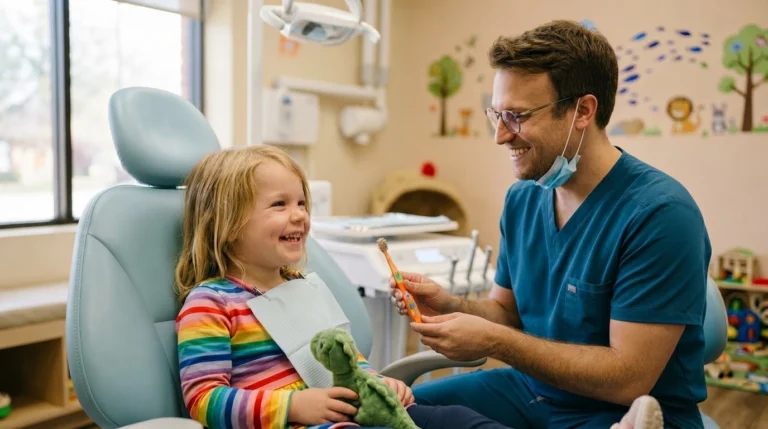


For parents of kids with autism, ADHD, sensory processing differences, or other special health care needs, a standard dental office can feel like an obstacle course before a single instrument touches a tooth. The overhead lights are harsh. The sounds are unpredictable. The smells are clinical and unfamiliar. A stranger in a mask is asking your child to open their mouth on demand. For a neurotypical child, these things are manageable. For a child with sensory sensitivities, they can be genuinely overwhelming, and the anxiety that follows doesn’t always stay contained to the appointment itself.
That’s the problem most dental offices haven’t solved. At Mighty Bites Pediatric Dentistry in Newtown Square, we build solutions into how we operate, not something we improvise when dental anxiety in children becomes a challenge to deal with. This guide explains what sensory-friendly dental care looks like here, what makes us different as a special needs pediatric dentist, and how we work with you to make every visit better than the last. If you’ve been putting off scheduling because you’re not sure your child will tolerate it, start here with a sensory-friendly dentist near you.
Why Is It Hard to Find a Sensory-Friendly Pediatric Dentist?
Understanding the challenge is the first step toward managing it. The dental environment triggers multiple sensory channels at once, and for a child whose nervous system processes input differently, that accumulation can quickly tip from tolerable to overwhelming.
Visually, the overhead operatory light is bright and directional, and the office is full of unfamiliar equipment and people. Auditorily, suction, the dental handpiece, and nearby conversations arrive without warning. Tactilely, gloved hands, instruments, the taste of prophy paste, and the sensation of someone working inside the mouth are inputs a child can’t fully anticipate or control. Add to that the unpredictability of the schedule, a waiting room that may have other children, and the simple fact that your child didn’t choose to be there, and you have a recipe for distress that has nothing to do with dental fear in the traditional sense.
Dental anxiety in children is common across the board. Still, in kids with sensory differences, it tends to be more intense and less responsive to the reassurances that work for other kids. “It’s going to be fine” doesn’t help a child who is in genuine neurological overload. What helps is a team that doesn’t create the overload in the first place.
What “Sensory-Friendly” Actually Means in Practice
The term gets used loosely, so it’s worth being specific about what we mean by it at Mighty Bites.
Sensory-friendly dental care is not a single accommodation. It’s a way of designing the entire visit, from the physical environment to the pacing to how the team communicates, around the idea that a child’s sensory and behavioral needs are as important as the dental work itself. That means making adjustments before they’re requested rather than reacting once a child is already distressed.
We have the best dentist for autistic children, and an office looking like this:
Lighting: The harsh overhead operatory light is one of the most consistent sensory triggers families report. We keep our environment as visually calm as possible, and we adjust lighting based on what each child tolerates. For children with significant photosensitivity, sunglasses are always an option, and we can reduce overhead lighting without compromising care.
Sound: We give warning before any instrument makes noise. For children who benefit from auditory blocking, we offer noise-canceling headphones and genuinely welcome them, rather than treating them as an inconvenience. Background music or white noise can also help mask the clinic sounds that tend to startle kids mid-visit.
Pacing: There is no standard appointment clock running in our treatment rooms. Some children need to take three tries to get into the chair. Some need a break after a routine cleaning. Some do better with a partial visit first, then a full visit once trust is built. We plan for all of these possibilities and treat them as clinical practice, not exceptions we’re graciously allowing.
Tell-show-do: Every step gets named, shown, and demonstrated before it happens. The child sees and feels the mirror before it enters the mouth. We introduce the suction tip before it’s used. A sensory-friendly visit has no surprises because surprises turn a manageable appointment into a difficult one.
Breaks on request: Any child, any age, any reason, can signal that they need a pause. We stop. We check in. We resume only when the child is ready. The care we’re providing is not more important than the child’s state.
Our Special Needs Pediatric Dentist: Training and Background
Sensory-friendly care requires more than good intentions. It requires specific clinical training, and not every pediatric dentist has it.
Our practice is built around specialized training for children with special health care needs that goes beyond a standard pediatric dental residency. That clinical depth shapes how our entire team runs appointments, not just the most challenging cases.
His background before dental school matters here too. Coaching children ages five through eighteen taught him what every pediatric specialist eventually learns: a kid’s feelings about what’s happening to them determine whether they cooperate, and fear-based cooperation doesn’t last. Kids perform better, in any setting, when they understand the sequence, feel respected, and aren’t rushed through something for the adult in the room’s convenience. That philosophy runs through every appointment at Mighty Bites.
What to Tell Us Before Your Child’s First Visit
One of the most effective things you can do as a parent is share information before the appointment, not on the day. The more we know about your child ahead of time, the better we can prepare the environment and the team.
Useful things to share:
- Specific sensory triggers your child has (sounds, smells, touch, visual input)
- Communication style and preferences, including whether your child uses AAC, signs, or has limited verbal communication
- Behaviors that signal rising distress, since these vary significantly by child and may not look like obvious anxiety
- What has helped or not helped in past dental or medical appointments
- Any comfort items your child relies on, because we want them in the room
Sharing this isn’t about lowering our expectations of your child. It’s about setting up the appointment for success rather than figuring it out mid-visit. You can share this information when you schedule your child’s visit, and our team will flag it for whoever is working with your child that day.
Sedation Options for Children Who Need More Support
For some children, sensory-friendly accommodations and a well-prepared team are enough. For others, dental anxiety or sensory reactivity is significant enough that additional support makes the visit both safer and more successful.
Nitrous oxide, often called laughing gas, is our most commonly used option for children who need more than behavioral management alone. It’s inhaled through a small nasal mask, takes effect within minutes, and wears off quickly once the mask is removed. A child stays awake, responsive, and able to communicate throughout the visit. It doesn’t sedate; it relaxes. For children with moderate anxiety or sensory differences who do better with a calmer physiological baseline during treatment, it can make a meaningful difference.
For more involved cases, including children who require more comprehensive treatment than a standard appointment allows or whose behavioral needs go beyond what nitrous oxide addresses, we discuss additional sedation options individually with families. We make every sedation decision collaboratively, with your child’s full medical and behavioral history in hand, after discussing what we recommend and why. Nothing is assumed or rushed.
You can find more detail about sedation and how we use it for children with sensory and behavioral differences on our special needs dentistry page.
Building Consistency Over Time
One of the most powerful things you can do for a child with sensory sensitivities is to make dental visits consistent, not just well-managed. Familiarity reduces anxiety in a way that even the most skilled individual visit cannot replicate.
When your child sees the same team, in the same space, following the same sequence of steps every six months, the environment stops being unpredictable. Familiar faces carry a baseline of trust. A child who knows what to expect from a visit can prepare mentally, and many children with autism and sensory differences do so actively and effectively when given the structure.
That is why we encourage families to stay with us across visits, especially early on when trust is still building. A child who had a difficult first appointment, a manageable second, and a confident third has built something that carries over to every future dental experience, not just ours. That’s the goal: not just a tolerable visit today but a child who can handle dental care throughout their life.
Our preventive care program is designed around this consistency. Cleanings, fluoride treatments, and routine exams every six months keep your child healthy and keep the environment familiar. We also use dental sealants for cavity-prone children, and the application is quick and non-invasive, making it one of the more manageable protective treatments for sensory-sensitive kids. Read more about our approach on our dental sealants page.
Dental Care for Infants and Toddlers with Sensory Differences
Early dental care matters even more for children with sensory differences, partly for the obvious health reasons and partly because the earlier a child has positive dental experiences, the less work there is to undo later.
We see infants from the time the first tooth appears, and our infant dentistry visits for young children with sensory considerations are designed to introduce the environment gradually, with very little clinical demand on the first appointment. The goal is for your child to leave feeling that the office is a calm, low-stakes place. That memory matters.
For infants whose families are already aware of a diagnosis or developmental difference, starting early also gives us time to understand your child before they’re old enough to have accumulated dental anxiety. An eighteen-month-old who visits us twice has an entirely different starting point at age three than one who has never been to a dentist.
What to Expect if Your Child Needs Restorative Work
Preventive care keeps most children healthy, but cavities and other restorative needs happen. For parents of sensory-sensitive kids, fillings or other procedures can feel more daunting than a cleaning.
The same accommodations that apply to preventive visits apply to every procedure we provide. Tell-show-do, pacing, breaks, sensory adjustments, nitrous oxide when appropriate, and your presence in the room throughout. The clinical steps don’t change; we tailor the delivery around your child.
For children who need more extensive treatment than a standard appointment allows, we discuss what that looks like before scheduling, including the appropriate sedation approach, how the appointment will be structured, and what recovery at home will look like. Our pediatric dental fillings and bondings page covers the restorative side in more detail.
Some children also grind their teeth, which is more prevalent in kids with autism and neurological differences than in the general pediatric population. Unmanaged grinding can cause enamel wear and jaw discomfort. If you’ve noticed this, it’s worth raising at your child’s next appointment. Our guide to bruxism and jaw pain in kids covers the signs, causes, and treatment options if you want to read about it first.
A Sensory-Friendly Dentist Near Me: Why Location and Fit Both Matter
When you’re searching for a sensory-friendly dentist near you, proximity matters; a long, stressful commute before an already stressful appointment doesn’t help anyone. But fit matters as much as location, because a nearby practice that doesn’t understand your child’s needs won’t solve the problem.
We serve families across Newtown Square, Broomall, Media, Wayne, Delaware County, and the Main Line. Families often tell us they drove past closer options because they wanted a practice specifically set up for children with special health care needs, not one that would try to accommodate theirs.
What makes a dentist genuinely appropriate for a child with autism or sensory differences isn’t just willingness. It’s clinical training in behavior guidance, a team that has worked with these children consistently, a physical environment designed to reduce triggers, and a philosophy that treats your child’s pace as non-negotiable. That’s what we mean when we call ourselves a sensory-friendly practice, and it’s what we’d encourage you to ask about at any practice you’re evaluating for your child.
Our full range of pediatric dental services covers everything your child may need, and our FAQs page answers many common questions families have before a first visit.
Ready to Find Out If We’re the Right Fit?
We don’t expect every family to book an appointment based on a website. If you’re not sure whether Mighty Bites is right for your child, you’re welcome to call us, ask questions, and get a feel for how we talk about your child’s needs before committing to a visit. That conversation costs nothing and tells you a lot.
When you are ready, our first visit page walks you through exactly what to expect, how to prepare your child, and how to share information about their needs in advance. We serve families across Newtown Square, Broomall, Delaware County, and the Main Line, and we built this practice to be exactly the kind of place parents of sensory-sensitive kids describe looking for.
Frequently Asked Questions
What is a sensory-friendly dentist?
A sensory-friendly dentist structures the environment and appointment to reduce sensory overload for children with autism, ADHD, sensory processing differences, or other conditions that make standard dental settings hard to tolerate.
How is a special needs pediatric dentist different from a regular pediatric dentist?
All pediatric dentists have specialty training beyond general dentistry, but not all have specific clinical training to treat children with special health care needs. A special needs pediatric dentist has additional experience in behavior guidance, alternative communication strategies, sensory accommodation, and often sedation management for children whose behavioral or medical complexity requires it.
How do I find an autism friendly dentist near me?
Beyond searching for an autism-friendly dentist near you by location, look for practices that mention specific accommodations rather than general friendliness, have a dentist with documented training in special health care needs, welcome pre-appointment communication about your child’s sensory profile, and offer sedation options when appropriate.
What should I tell the dental office before my child’s appointment?
The most useful information includes your child’s specific sensory triggers, communication style and preferences, behaviors that signal rising distress, what has helped or not helped at past medical appointments, and any comfort items your child uses.
Is nitrous oxide safe for children with autism or sensory sensitivities?
Yes. Nitrous oxide is a widely used and well-tolerated sedation option for children with autism and sensory differences. It is inhaled through a small nasal mask, works quickly, and wears off within minutes of removal. The child stays awake and responsive throughout. It doesn’t sedate; it reduces physiological anxiety, making the sensory experience of the visit more manageable.
Can I stay with my child during the dental appointment?
Yes, always. For children with sensory differences and special health care needs, a familiar caregiver in the room is not just welcome; it’s part of how we structure the visit. You know your child better than we do, and your presence helps us help them.
At what age should a child with sensory differences start seeing a dentist?
The same recommendation applies as for any child: by the first birthday or within six months of the first tooth appearing. For children with sensory differences, starting early has added benefit because it builds familiarity with the dental environment before anxiety has a chance to take root.
What if my child had a bad experience at another dentist?
It’s one of the most common reasons families come to us, and it’s a very reasonable starting point. We don’t expect a child with a difficult dental history to trust us immediately, and we don’t push for clinical progress on a first visit if trust isn’t there yet.