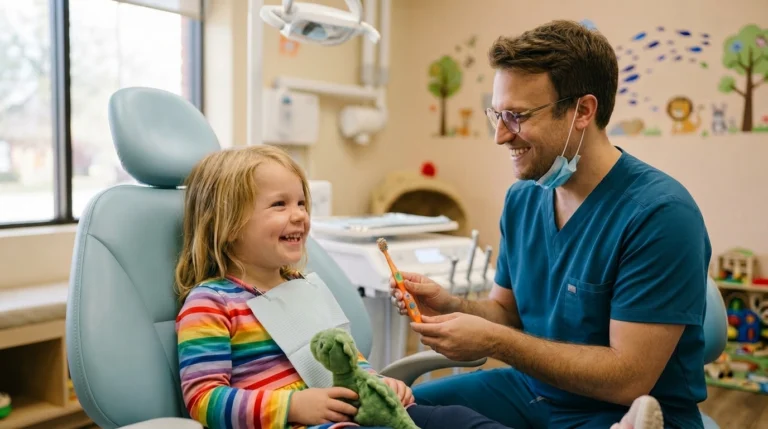


If your child cries, clings, or shuts down at the mention of a dental visit, you’re not alone. Parents across Newtown Square, Broomall, and Delaware County search for ways to ease dental anxiety in kids because most dental offices were never built with anxious children in mind. We built ours differently, and the good news is that kids’ dental anxiety is manageable. With the right strategies and the right pediatric dentist, dread can turn into confidence within a few visits.
This guide walks through five practical tips for easing dental anxiety in kids, explains what causes it in the first place, and shows you how we create a fear-free, judgment-free space at Mighty Bites Pediatric Dentistry. Calming an anxious child takes more than a friendly smile. It takes training, patience, and a system built around your child’s pace, which is exactly what you’ll find at every first visit with us.
Whether your child is heading to their very first appointment or has struggled with visits before, these solutions for dental anxiety in kids can help your family build a calmer, more positive relationship with dental care.
What Causes Dental Anxiety in Kids?
Before you can ease dental anxiety in kids, it helps to understand where it actually comes from. Most children aren’t born afraid of the dentist. Fear builds gradually, shaped by unfamiliarity, experience, and a few very normal childhood instincts.
A few of the most common causes:
- Fear of the unknown, including unfamiliar sounds, smells, and tools
- Fear of pain or needles, often picked up from older siblings or friends rather than personal experience
- A previous appointment that felt rushed, painful, or confusing
- Your own nerves, since kids tend to mirror a caregiver’s tone and body language before a visit
- Sensory overload from bright lights, loud equipment, or unfamiliar textures, which shows up especially often in children with sensory processing differences
- A simple loss of control, since your child rarely gets to choose when or how a visit happens
Once you understand why your child feels nervous, the tips below become much easier to put into practice.
How to Tell If Your Child Has Dental Anxiety
Dental anxiety doesn’t always look like crying. Some kids show it in ways that are easy to miss, especially once they’re old enough to mask big feelings.
Here’s what to watch for:
- Crying, tantrums, or refusal to get in the car on appointment day
- Abdominal discomfort, headaches, or other physical complaints with no clear cause
- Repeated “what if” questions in the days leading up to a visit
- Clinging to you or freezing once seated in the chair
- Changing the subject every time the appointment comes up
It’s worth considering for parents that dental anxiety symptoms in their kids may differ based on sensory processing differences. Instead of crying, you might see stimming, shutting down, or physical resistance. Catching these signs early gives you and your child’s dental team time to adjust the approach before anxiety turns into a full refusal, especially when a broader special needs diagnosis is part of the picture.
Tip 1: Start the Conversation at Home
How you talk about the dentist at home matters just as much as anything that happens in the chair, because kids absorb tone before they absorb words. The goal is calm, age-appropriate honesty rather than reassurance that can backfire. Phrases like “it won’t hurt” or “don’t be scared” tend to do the opposite of what you intend, planting the idea that something might hurt or that there’s something worth being scared of in the first place.
Simple, factual language works better. Something like “the dentist checks your teeth and helps them stay strong” gives your child information without adding worry, and books, videos, or pretend play that walk through a visit step by step can do the same thing in a lower-stakes setting at home. Letting your child ask questions and then answering them honestly builds more trust than reassurance ever will. If you want more specific phrasing to borrow, our guide to pediatric dentistry for parents walks through language for nearly every age and situation, so you’re not starting from scratch.
A few minutes of preparation like this can meaningfully shift how your child walks into the office.
Tip 2: Choose a Pediatric Dentist, Not a General Dentist
Provider choice is one of the biggest factors in dental anxiety reduction for kids, and it’s often the one parents think about least. A pediatric dentist typically completes 2-3 additional years of specialty training beyond dental school, focused entirely on child psychology, behavior guidance, and the unique needs of developing teeth and jaws. A general dentist, however skilled, simply hasn’t gone through that training.
Board certification is worth checking for the same reason. Our pediatric dentist, Dr. Rich Clark, is board-certified through the American Board of Pediatric Dentistry (ABPD), meaning he’s passed rigorous examinations well beyond residency. Before dental school, he spent years coaching a youth swim team for kids ages five to eighteen, learning firsthand how to help nervous kids build confidence one step at a time, a skill that shows up in nearly every appointment we run today. He also teaches on the faculty at St. Christopher’s Hospital for Children in Philadelphia, training the next generation of pediatric dentists in this same behavior-focused approach.
That kind of training, paired with a child-scaled office and a team built specifically for anxious kids, is what you’ll find across our pediatric dental services.
Tip 3: Ask About Nitrous Oxide and Sedation Options
For some kids, conversation and the right provider help a lot, but they’re not always quite enough on their own, and that’s where nitrous oxide can come in.
Nitrous Oxide for Kids’ Dental Anxiety: What Parents Should Know
Nitrous oxide, often called laughing gas, is a mild gas mixed with oxygen and inhaled through a small nasal mask. It helps your child relax without putting them to sleep, and most kids start feeling calmer within a few minutes. The effects wear off quickly too, so your child can go right back to their normal routine once the mask comes off.
It tends to work best for mild to moderate anxiety, kids with sensory sensitivities who need a little extra help staying calm, and shorter procedures like fillings or cleanings. It’s also worth distinguishing from deeper sedation, like oral conscious sedation or general anesthesia, which we typically reserve for more involved procedures or kids who need a deeper level of relaxation. With nitrous oxide, your child stays awake, aware, and able to respond throughout the procedure.
Every sedation decision starts with a conversation, never an assumption. We’ll walk you through the options, the safety considerations, and what to expect, and we’ll ask for your informed consent before moving forward. If sensory sensitivities or a special-needs diagnosis are part of the picture, sedation usually works hand in hand with the other adjustments built into our special-needs dentistry approach.
Tip 4: Use Tell-Show-Do at Every Appointment
Tell-show-do is one of the most effective behavior guidance techniques in pediatric dentistry. It’s simple enough that you can recognize it and reinforce it at home: tell your child what’s about to happen using simple, honest language, show them the tool or step (often by letting them touch or hold it first), then do the step itself, calmly and at your child’s pace.
This removes the fear of the unknown, which is one of the biggest concerns when discussing dental anxiety in kids, and builds trust through predictability, since your child learns that nothing happens without a warning. It’s the same lesson our pediatric dentist learned years ago while coaching nervous swimmers: kids do better when they understand what’s coming next, not when they’re caught off guard. We apply tell-show-do at every appointment, not just the first one, so trust keeps building visit after visit.
Tip 5: Make Dental Visits a Consistent Routine
Infrequent visits tend to make anxiety worse, not better, since long gaps between appointments mean everything feels unfamiliar all over again, the chair, the sounds, even the faces. Visiting every six months keeps the environment familiar. It reduces surprises at each appointment, and the preventive care that comes with it lowers the odds of needing more involved, anxiety-triggering procedures later on, since small issues get caught early rather than turning into bigger ones.
A few things help reinforce this at home: praising your child for getting through the visit, regardless of how it went, a small reward or bit of positive reinforcement afterward (especially in the early stages), and sticking with the same provider whenever you can, since a long-term relationship with one trusted team builds a kind of familiarity a rotating cast of providers just can’t match.
More than any single technique, consistency is what turns a fearful child into a confident one over time.
Special Needs and Dental Anxiety: What Parents Should Know
If your child has autism, ADHD, or another sensory processing difference, dental anxiety often runs deeper and for different reasons than it does for other kids. A dental office is a sensory-heavy environment by design. Bright overhead lights, the sound of a handpiece, the texture of gloves, and unfamiliar smells can all trigger overload before a single tool ever touches a tooth.
We build accommodations into how we run every visit, rather than treating them as exceptions. That means a slower, more flexible pace, sensory-friendly adjustments like dimmed lighting or noise-reducing headphones, and nitrous oxide for kids who benefit from it. You play an important role too: sharing details before the appointment, like sensory triggers, communication preferences, or past experiences that didn’t go well, helps us prepare in advance rather than adjust in the moment.
Dental anxiety in kids with special needs responds best to a real team effort between you, your child, and us, which is exactly how our special needs dentistry approach is built.
What to Expect at a Fear-Free Dental Visit at Mighty Bites
Knowing what a visit actually looks like in advance can ease a lot of anxiety on its own. Before anything clinical begins, we introduce ourselves and the space first: your child gets time to look around, ask questions, and meet the people they’ll be working with, all before ever sitting in the chair. We talk to every child at their level, using simple language and a calm, unhurried pace.
The office itself is designed with this in mind too, a bright, ocean-themed space built to feel more like a fun environment than a clinical one. There’s no countdown clock here, no rushing through steps, and no pressure to perform.
If your child becomes distressed mid-visit, we slow down rather than push through. We pause, check in, and adjust the plan, whether that means a short break, a different approach, or picking up the rest of the visit another day, and there’s no judgment in that decision, for your child or for you. A first visit is built around exactly this kind of patience, so your child’s comfort always comes before the clock.
Help Your Child Overcome Dental Anxiety With Us!
Overcoming dental anxiety in kids is rarely about one single change. It’s the combination of honest conversation at home, the right provider, and a practice built around your child’s pace instead of the clock.
We proudly serve families across Newtown Square, Broomall, Delaware County, and the Main Line with fear-free, judgment-free pediatric dental care. Whether your child needs a first visit or a fresh start after a rough dental experience, we’re ready to meet them exactly where they are. When you’re ready, scheduling your child’s visit is the next step- no pressure, no rush, just a calmer path to a healthier smile.
Frequently Asked Questions
What is the difference between dental fear and dental anxiety in kids?
Dental fear is a reaction to something specific and immediate, like the sound of a drill in the room. Dental anxiety in kids is more general, a sense of dread that builds before a visit even happens, sometimes for days in advance. Both are common, and both respond well to the same approach: predictability, choice, and a team trained specifically in pediatric behavior guidance.
At what age can dental anxiety in kids start?
It can start as early as toddlerhood, though it often becomes more noticeable around ages three to six, once your child is old enough to anticipate an appointment but still developing the words to express the worry. It can also show up later, usually after an uncomfortable or rushed dental experience.
Is nitrous oxide safe for kids with dental anxiety?
Yes. Nitrous oxide is widely recognized in pediatric dentistry as a safe, well-tolerated option for managing mild to moderate dental anxiety in children. We administer it under close supervision; it wears off quickly, and your child stays awake and responsive throughout the visit. We’ll review your child’s health history and the planned procedure with you before recommending it.
How do I prepare my child for their first dental visit?
Use simple, honest language about what’s going to happen; skip phrases like “it won’t hurt”; and try reading their favorite book or watching a video about visiting the dentist beforehand. Letting your child ask questions and then answering them calmly goes further than reassurance alone.
What should I look for in a pediatric dentist for an anxious child?
Look for board certification, specific training in child behavior guidance, a child-scaled office, and a team experienced in techniques like tell-show-do. A provider who takes the time to walk you through options, including nitrous oxide when it’s appropriate, rather than rushing through the visit, tends to make the biggest difference for anxious kids.
How is dental anxiety handled differently for children with special needs?
Autistic kids, or ones with ADHD, or sensory processing differences often need a slower pace, sensory-friendly adjustments like dimmed lighting, and sometimes nitrous oxide to manage dental anxiety. The approach gets built around your child’s specific triggers and communication style, not a one-size-fits-all visit.
Does Mighty Bites Pediatric Dentistry see children with autism or sensory sensitivities?
Yes. Our team has specialized training in treating kids with special oral health care needs, including autism and sensory processing differences, and we build each visit around your child’s individual needs.
How often should a child with dental anxiety visit the dentist?
Every six months, the same recommendation as for any child. Consistent visits keep the environment familiar, which is one of the most effective long-term solutions for dental anxiety in kids, since unfamiliarity is so often what drives the fear in the first place.